Custom web applications
Purpose-built products for customer, partner, or internal workflows.

Build custom applications that connect existing systems through purpose-built workflows.
Discuss Custom Software needsWhen teams rely on spreadsheets, inboxes, disconnected SaaS products, duplicate entry, and informal status updates, the operation becomes difficult to see and harder to scale.
Tekrra1 maps users, states, decisions, permissions, data, integrations, and edge cases before development. We then build the smallest coherent platform that can evolve with the work.
The right scope focuses on a defined business change, not a long list of technology features.
Purpose-built products for customer, partner, or internal workflows.
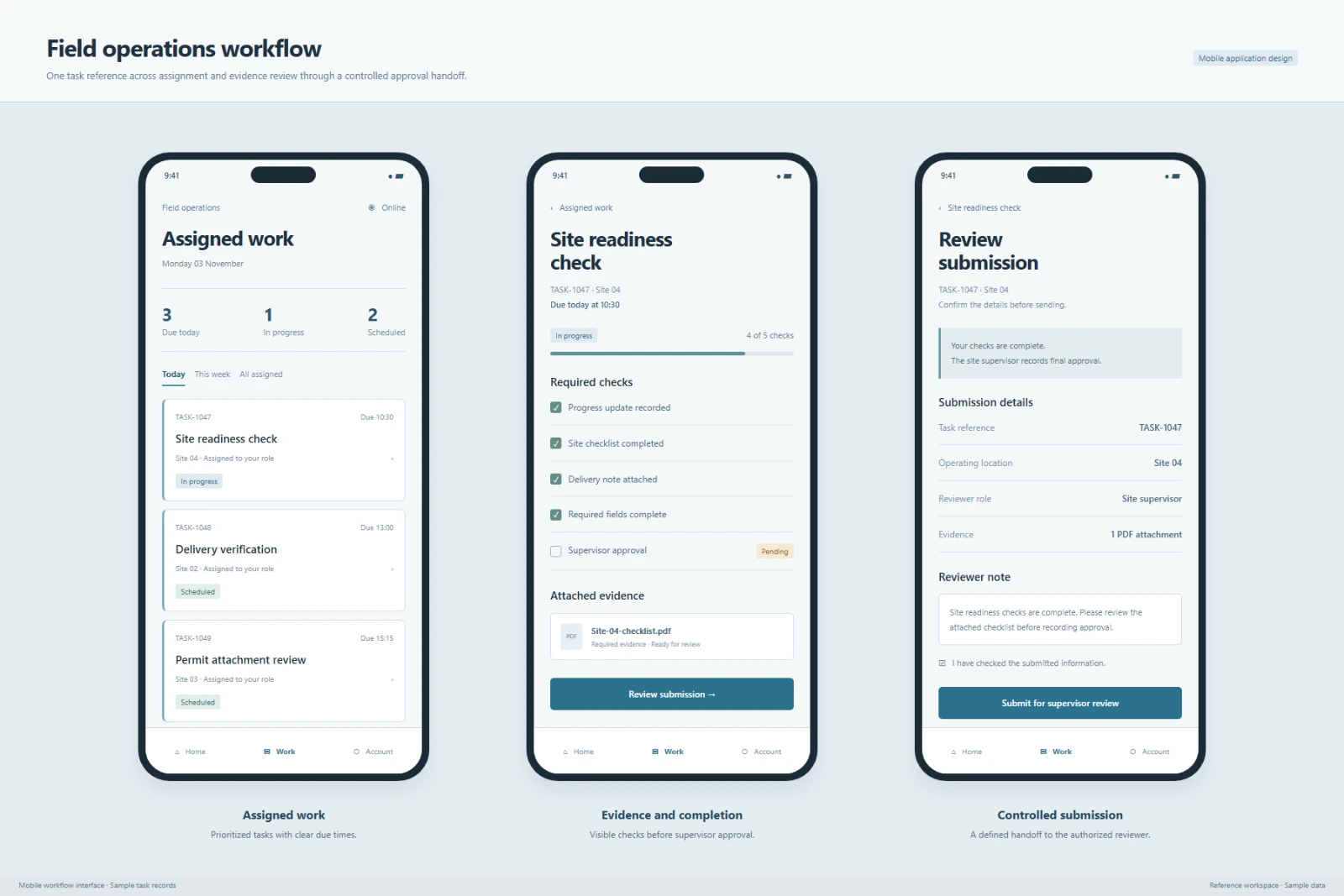
Responsive and mobile-first tools for work beyond the desktop.
Centralized experiences for requests, knowledge, documents, status, and collaboration.
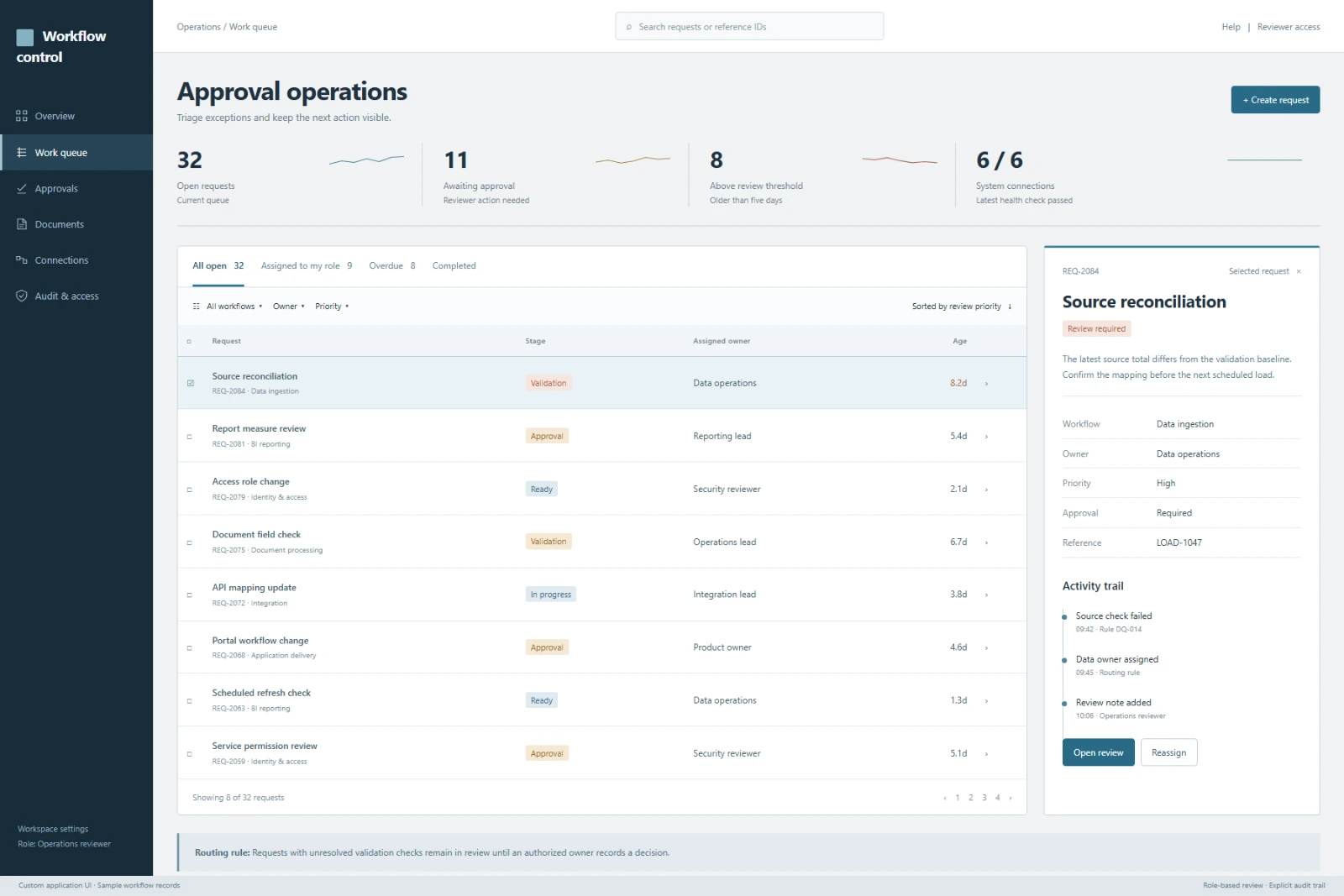
Structured intake, routing, approvals, tasks, exceptions, notifications, and operational control.
APIs and integration services that connect platforms and reduce duplicate work.
Scalable architecture, deployment, observability, security, and operational foundations.
Technical decisions stay connected to users, controls, ownership, and adoption throughout the work.
Map audiences, goals, states, decisions, data, systems, constraints, and edge cases.
Prototype information architecture and interaction behavior with real users and scenarios.
Build secure, testable, observable software with appropriate integration and deployment patterns.
Support adoption, monitor behavior, prioritize feedback, and deliver future releases.
Service focus: The application starts with the responsibilities and states in the operating workflow.
Design priorities: Custom interfaces connect approved systems through maintainable integrations.
Delivery checks: Acceptance checks cover task completion and permission boundaries. Mobile layouts preserve the same workflow ownership.
Explore case studiesPractical answers to help you decide what to do next.
Custom software may be appropriate when a business-critical workflow cannot be handled effectively through configuration or integration. Compare long-term ownership, security, support, and maintenance costs before deciding to build.
Often, yes. Applications can integrate through approved APIs, file exchanges, or other supported interfaces. Integration feasibility depends on access, vendor limits, security controls, and the quality of the underlying data.
Maintenance responsibilities, source-code rights, hosting, support, security updates, and handover should be defined in the engagement agreement. A maintainable architecture and documentation should be planned before development starts.
We can help determine what should be configured, integrated, automated, or built.
Discuss your Cross-Platform Solutions priority